When most travelers plan a trip to Emilia-Romagna, they usually focus on Bologna, Modena, Parma, or Ravenna.
And honestly, I can’t blame them. These cities are famous for a reason.
But hidden between Bologna and Ravenna lies a town that many visitors pass through without ever stopping.
That town is Faenza.
In fact, if you enjoy discovering places that sit beyond the region’s most famous destinations, Faenza deserves a place alongside some of the other hidden gems of Emilia-Romagna.
Unlike some of Italy’s more famous destinations, Faenza doesn’t feel overwhelmed by tourism. People still come here to shop, meet friends in the piazza, and go about their daily lives.
If you’re looking for a slower side of Emilia-Romagna, Faenza is a wonderful place to start.
In this guide, I’ll show you exactly how to spend a day in Faenza, from its elegant piazzas and ceramic museums to the cafés and local spots that make the city so enjoyable to explore.
This article contains affiliate links. If you buy through them, Chasing Italy may receive a small commission, at no extra cost to you.
Faenza at a Glance
- Best known for: ceramics
- Time needed: 1 day
- Perfect for: art lovers, slow travelers, families
- Distance from Bologna: 40 minutes by train
- Need a car? No
- Budget: €55–60 per person
What Is Faenza Known For?
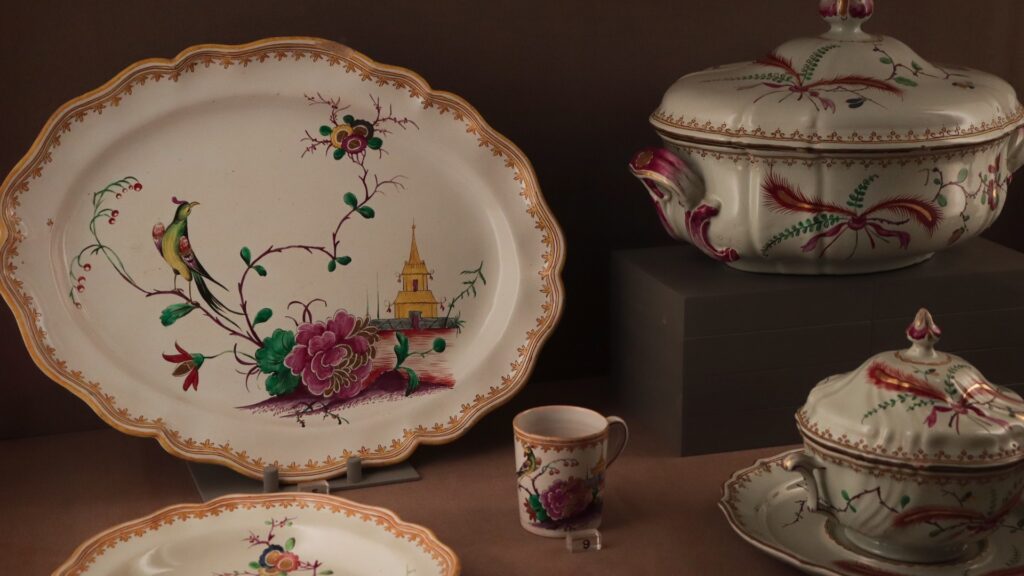
Faenza is best known for ceramics.
In fact, the city’s connection to pottery is so important that the French word faience, used to describe tin-glazed pottery, comes from Faenza itself.
Ceramics have shaped the city’s identity for centuries. You’ll notice this not only in museums, but also in artisan workshops, shop windows, decorative details, and local pride.
Faenza doesn’t treat ceramics like a tourist attraction. It feels like part of the city’s everyday character.
But Faenza is not only about pottery.
The city also has elegant piazzas, historic churches, charming streets, and a relaxed atmosphere that makes it ideal for travelers who enjoy slow exploration more than crowded sightseeing.
How to Spend a Day in Faenza
1. Have Breakfast at Nove100
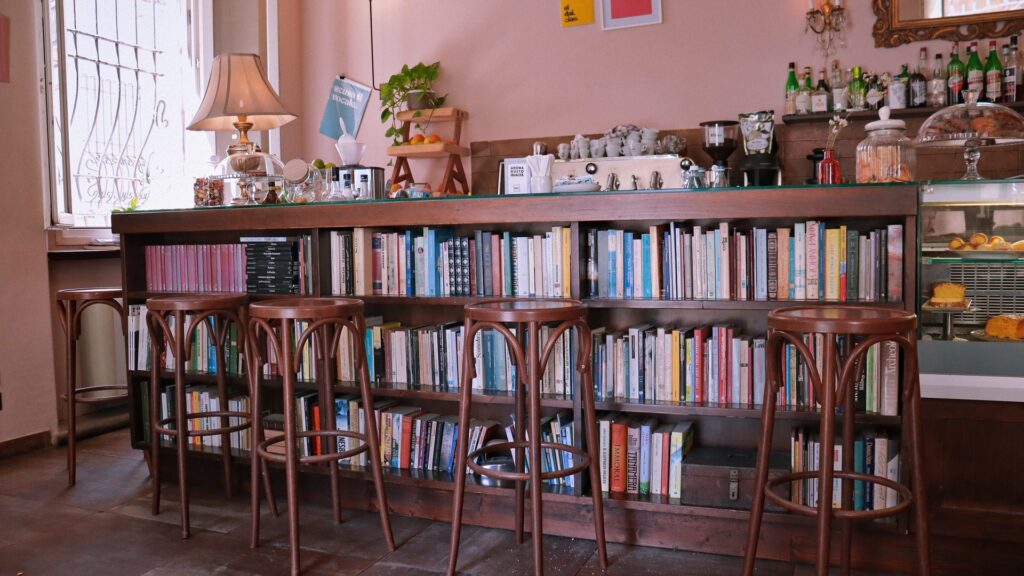
Start your day at Nove100, one of my favorite spots in Faenza for breakfast or brunch, depending on what time you arrive in the city.
Located just a short walk from the historic center, it’s the perfect place to ease into the slower rhythm of Faenza before heading off to explore its piazzas, churches, and ceramic workshops.
What immediately caught my attention when I first visited wasn’t the food, but the books.
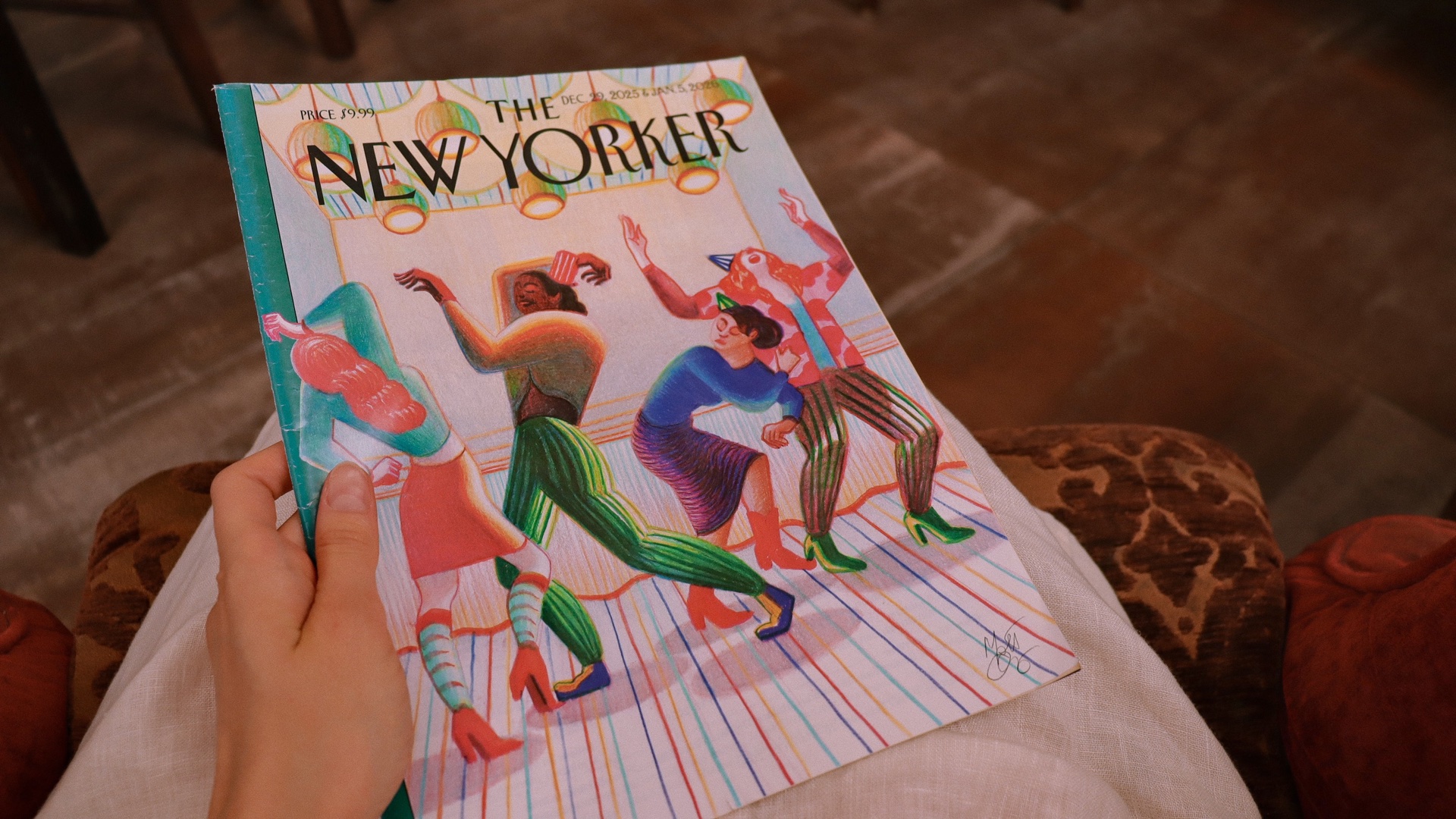
The café is lined with shelves, creating the feeling of a small library rather than a typical Italian bar. I was particularly surprised to find a collection of The New Yorker magazines in English—something I honestly haven’t encountered anywhere else in Emilia-Romagna.
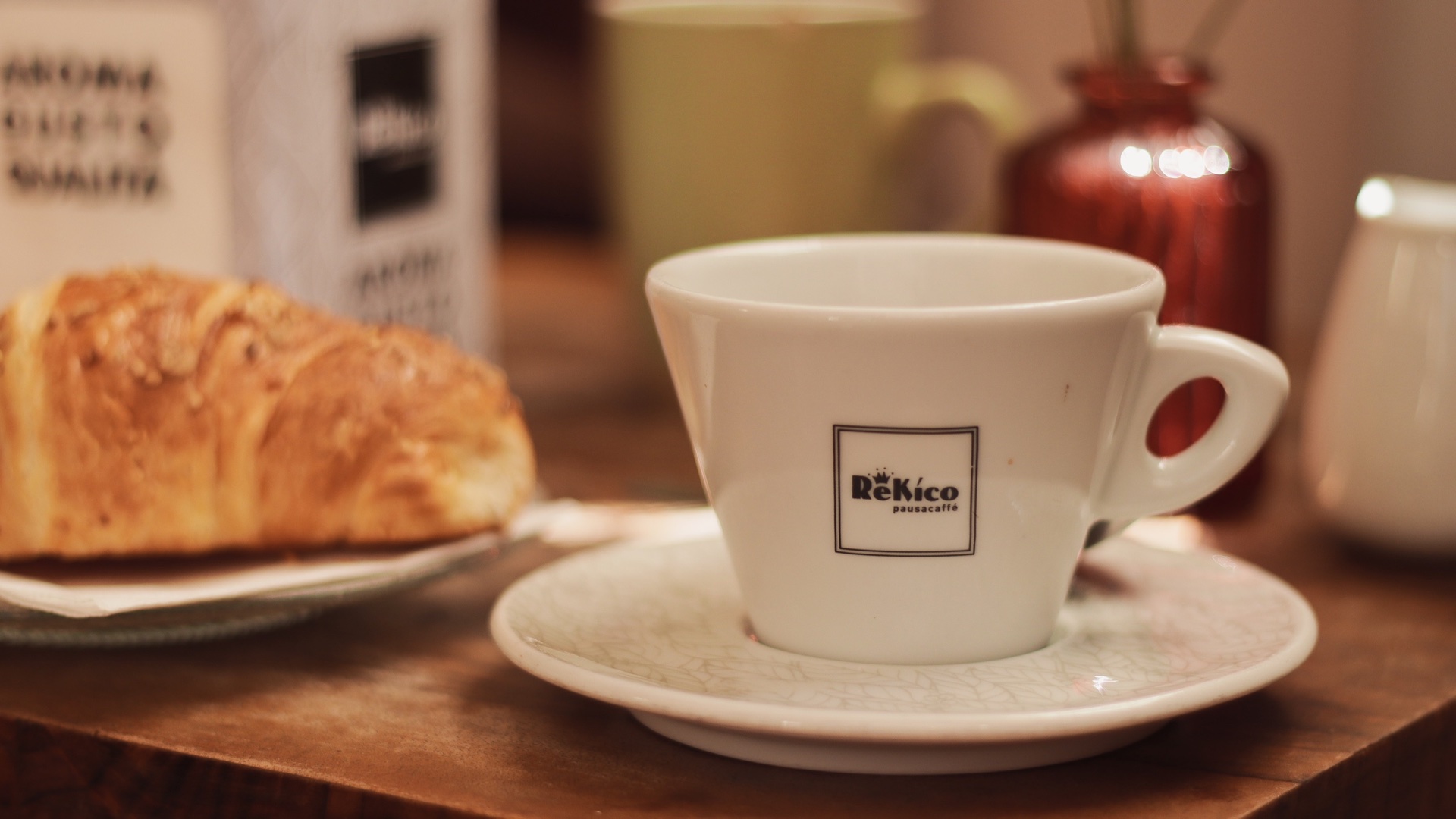
The menu is equally inviting. Alongside classic Italian breakfast pastries, you’ll find cakes, salads, crostoni, and beautifully arranged taglieri that make it a great choice for a light lunch or brunch as well.
Nove100 also serves as a cultural hub for the city, regularly hosting concerts, book clubs, film screenings, and community events.
As a reference, my Italian breakfast of a brioche and an Americano coffee cost just €3.30, making it one of the most affordable—and enjoyable—starts to a day in Faenza.
2. Explore Piazza del Popolo and Piazza della Libertà
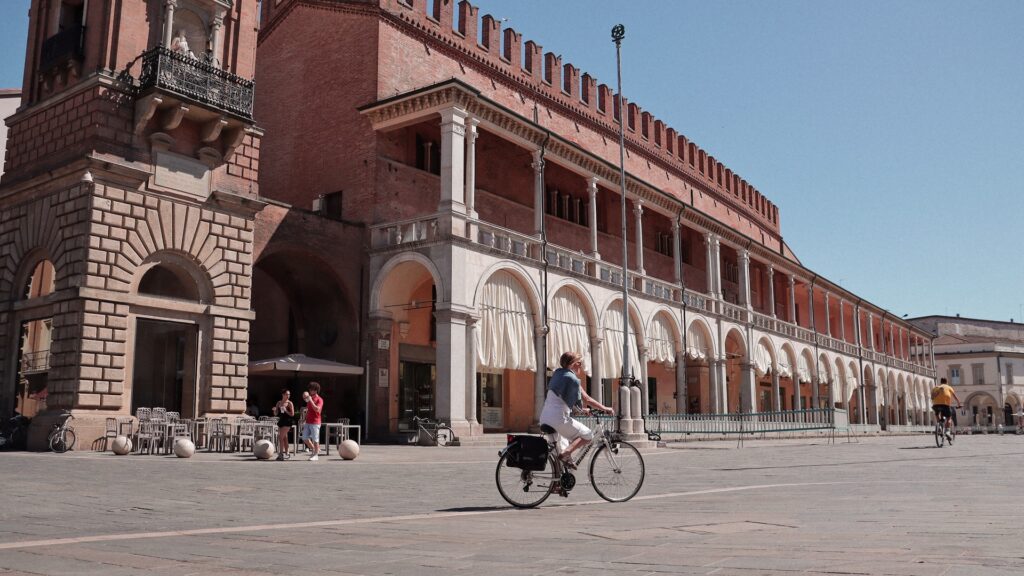
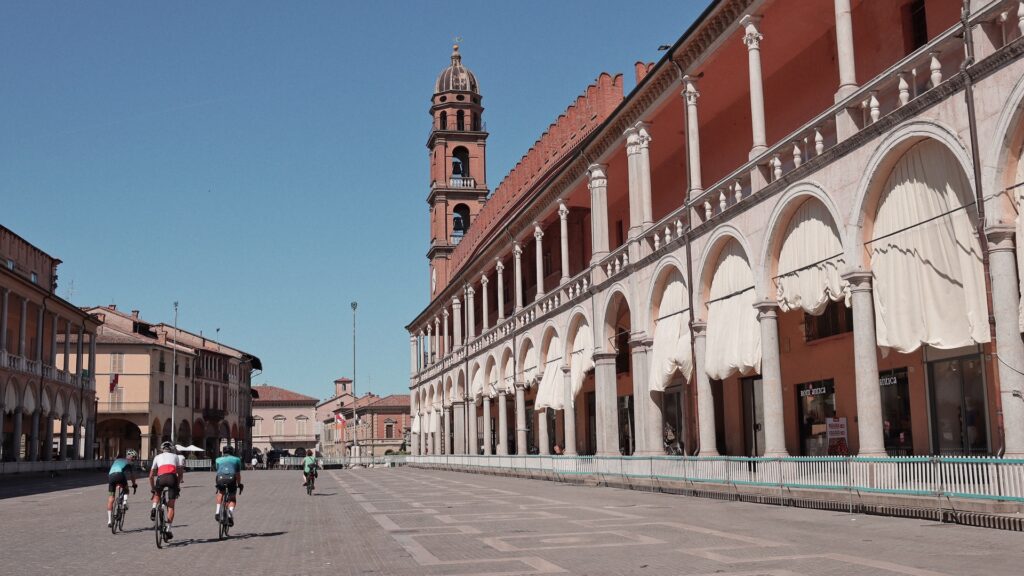
After breakfast, make your way toward the historic center. Within a few minutes, you’ll arrive at Piazza del Popolo and Piazza della Libertà, the two squares that form the heart of Faenza.
As you walk around, you’ll notice elegant Renaissance architecture, historic palaces, arcaded walkways, and that relaxed rhythm typical of smaller Emilia-Romagna towns. Nothing feels overly staged or rushed.
One detail that immediately caught my attention was how many people move through the center by bicycle. Bikes pass quietly across the piazza, leaning against walls or parked outside cafés, adding to the city’s easygoing, lived-in atmosphere.
It’s a small thing, but it says a lot about Faenza. This is not a city you need to conquer with a strict itinerary. It’s a city to wander, observe, and slowly settle into.
Keep in mind that on weekends, Piazza del Popolo and Piazza della Libertà often turn into a large market. It’s a lovely glimpse of local life, but it can also change the first impression of the squares, especially if you were hoping to admire the architecture without stalls, crowds, and movement everywhere.
That’s exactly what happened to me.
If you want to see the piazzas at their most elegant and spacious, I’d recommend coming back later in the afternoon, around 4 PM, when most of the sellers have packed up and the squares begin to feel like themselves again.
3. Discover One of Romagna’s Oldest Museums
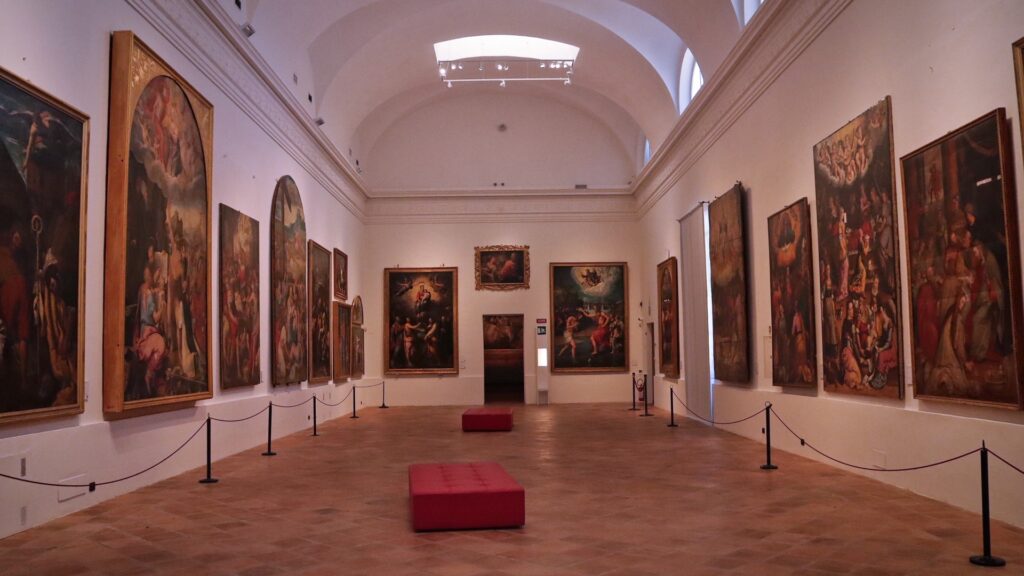
Once you’ve explored the piazzas and gotten a feel for the city’s atmosphere, continue toward the Pinacoteca Comunale. It’s only a short walk away and offers a fascinating introduction to Faenza’s artistic heritage.
Housed inside a former Jesuit convent, the Pinacoteca is actually the oldest museum in Romagna, telling the story of more than a thousand years of art, from the Middle Ages to the twentieth century.
What I appreciated most is how the collection evolves as you move through the building. One moment you’re standing in front of medieval religious paintings shimmering with gold details, and a few rooms later you’re looking at bold twentieth-century works influenced by Symbolism, Expressionism, and modern Italian art.
The museum’s Renaissance collection is particularly interesting. Among the highlights are works connected to the Manfredi family, who once ruled Faenza, as well as paintings that reveal how artistic influences from Florence and Bologna reached this part of Emilia-Romagna centuries ago.
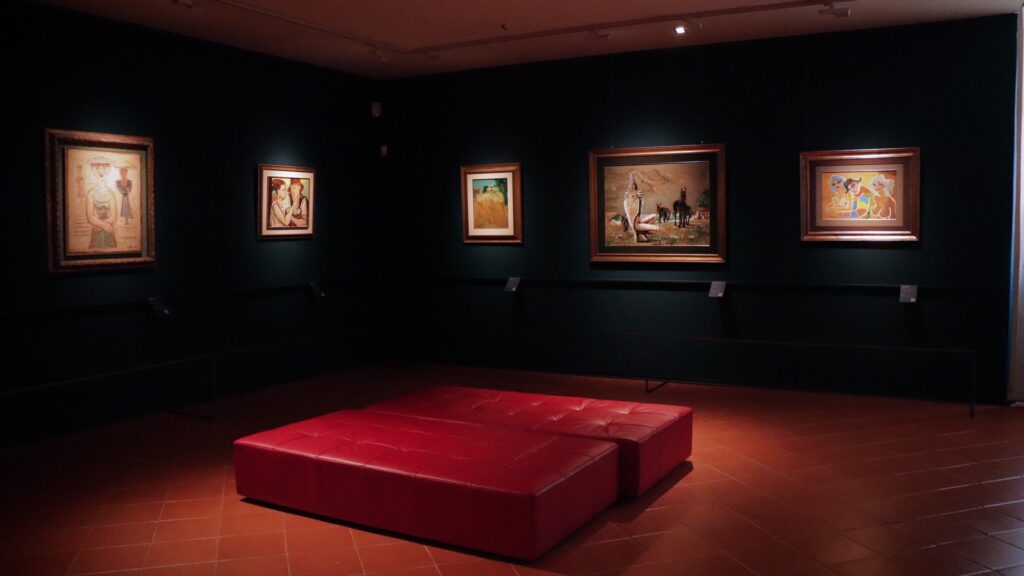
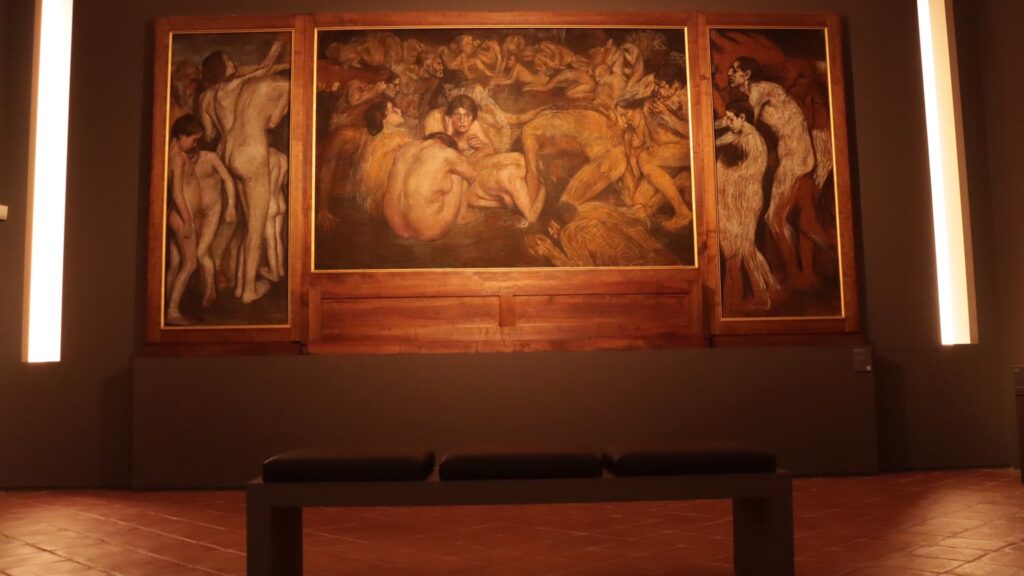
If you prefer modern art, don’t rush through the upper galleries. The Bianchedi Bettoli–Vallunga Collection contains an impressive selection of twentieth-century Italian paintings, including works by artists such as Giorgio de Chirico, Carlo Carrà, Alberto Savinio, Mario Sironi, and other major names of modern Italian art.
What makes the Pinacoteca special is that it never feels overwhelming. It’s compact enough to explore in an hour, yet varied enough that almost every visitor will find something that catches their interest.
Practical Information
- Admission: €5 for a full-price ticket
- Opening hours:
- Tuesday–Thursday: 15:30–18:30
- Friday–Sunday: 10:30–18:30
- Closed on Mondays (except holidays)
4. Step Inside Palazzo Milzetti
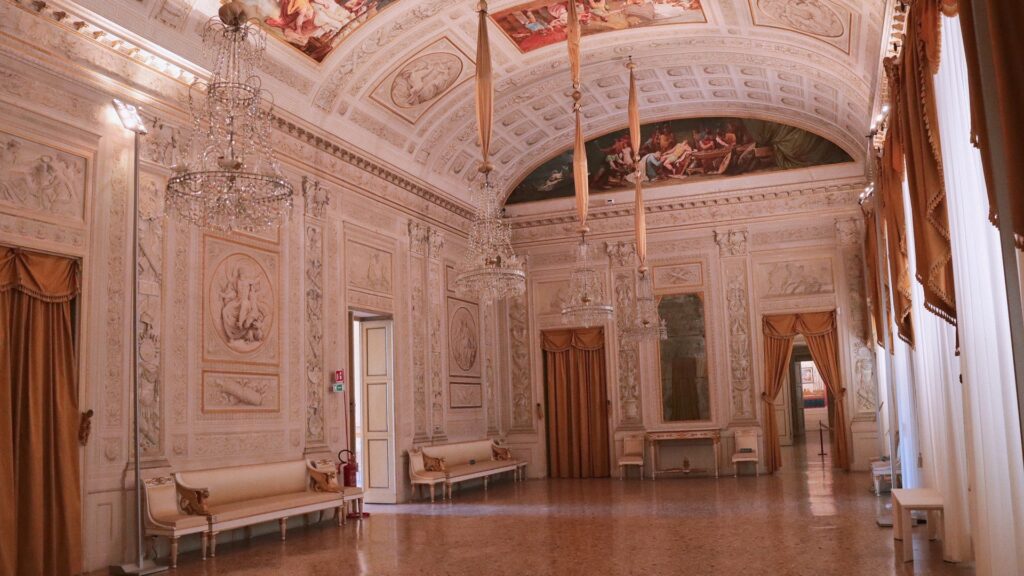
After the Pinacoteca, head to Palazzo Milzetti. The walk takes just a few minutes, and together these two museums provide a wonderful contrast between art, architecture, and local history.
Built for the noble Milzetti family at the end of the eighteenth century, the palace is considered one of the finest examples of Neoclassical architecture in Italy. Today it houses the National Museum of the Neoclassical Age in Romagna.
The highlight for me was the magnificent Golden Room. The combination of gilded details, painted ceilings, and natural light creates a space that feels almost theatrical.
As you move through the palace, you’ll notice that ancient mythology appears everywhere: gods, heroes, allegorical figures, and elaborate decorative scenes transform the interiors into something that feels halfway between a palace and a work of art.
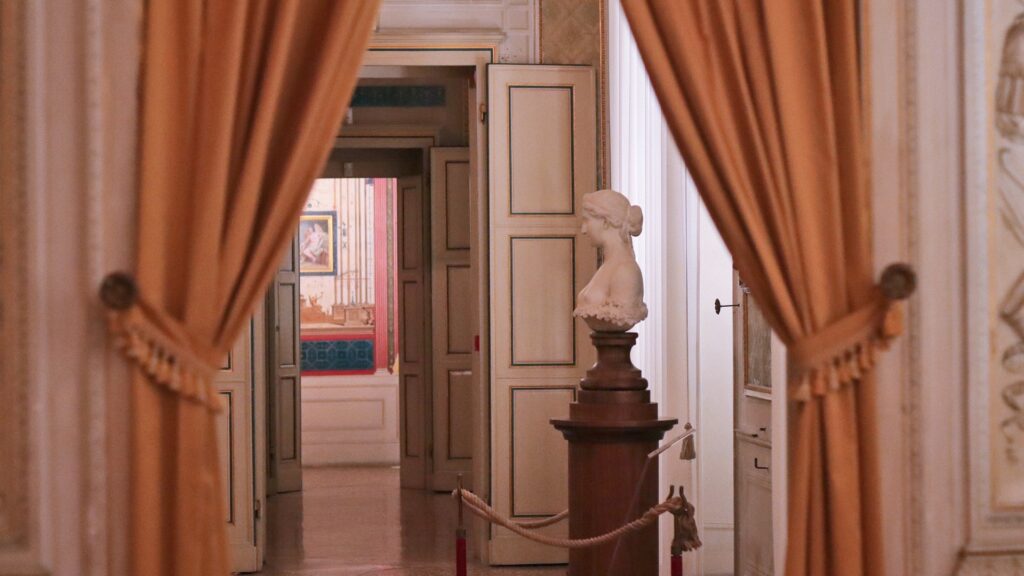
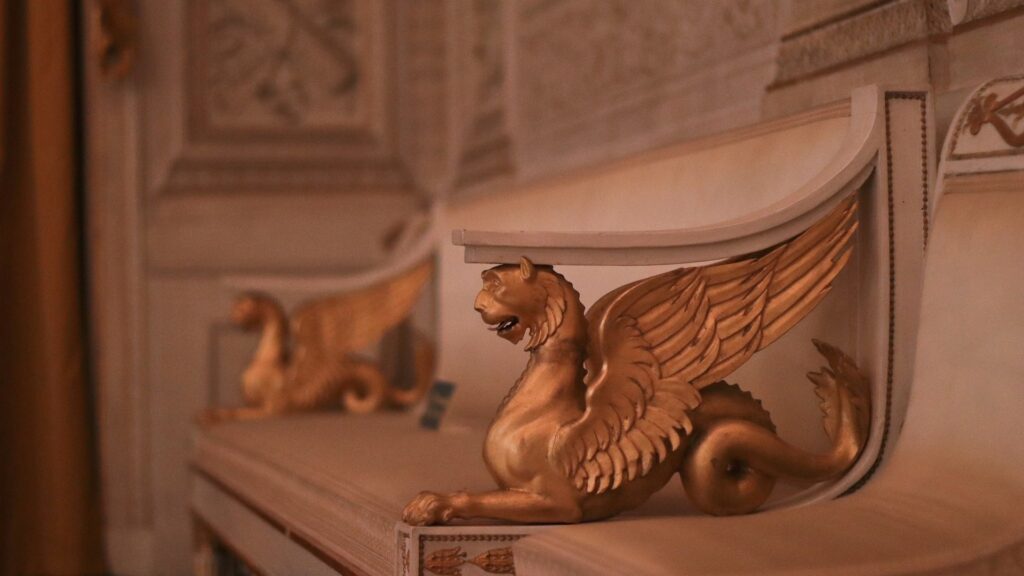
One of the most unusual features is the immersive virtual reality experience available inside the museum. Using VR technology, visitors can watch dancers move through the historic rooms of the palace, blending contemporary performance with centuries-old architecture.
Before leaving, don’t miss the small bamboo garden hidden behind the palace. After the richly decorated interiors, the quiet greenery feels almost like a reset button.
Palazzo Milzetti isn’t as overwhelming or grand as some of Italy’s most famous palaces. If you compare it to places like Palazzo Pitti, Palazzo Ducale, or the royal residences near Turin, it feels much smaller and quieter. But that’s exactly part of its charm.
Practical Information
- Admission: €5 for a full-price ticket
- Opening hours:
- Monday–Saturday: 9:00–18:30
- Sunday: 13:30–18:30
5. Have Lunch at QCorner
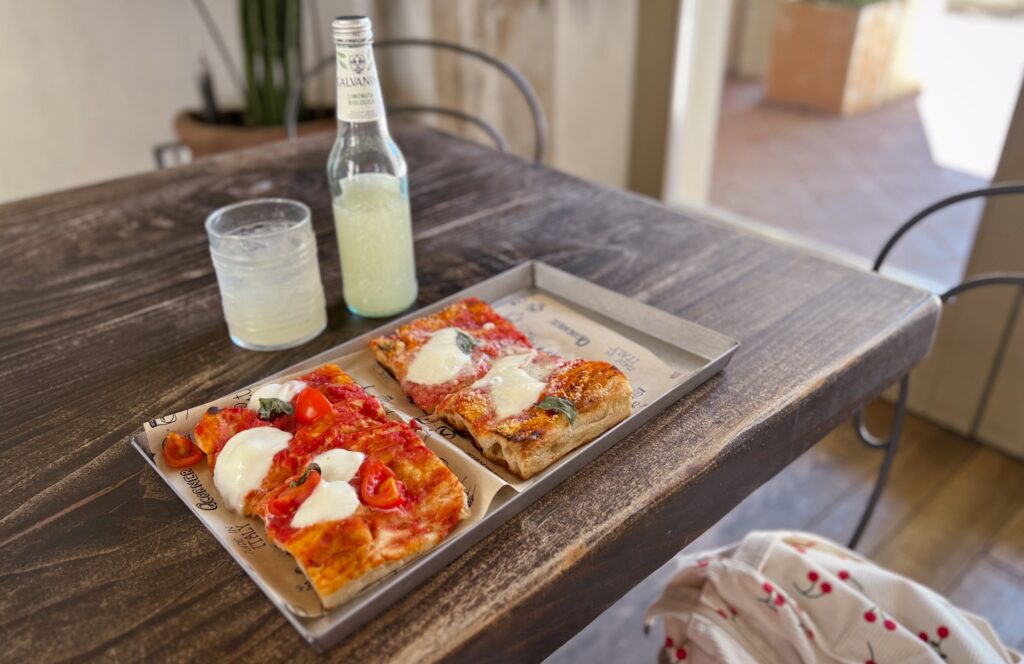
By now, you’ve spent the morning exploring Faenza’s piazzas, museums, and historic streets, so it’s the perfect time to take a break and enjoy lunch.
I chose QCorner, a modern café and restaurant that focuses on locally sourced ingredients and km 0 products. The atmosphere feels relaxed and contemporary without losing that welcoming Romagna hospitality.
While many visitors stop by for lunch, QCorner is also a popular brunch spot. The menu includes pancakes, French toast, yogurt bowls, sandwiches, and gourmet toasts, making it a good option whether you’re arriving early or looking for a lighter meal.
For lunch, I ordered a pizza, an organic lemonade, and a coffee. The total came to just €13.50, which I thought was excellent value considering the quality of the ingredients and the central location.
6. Visit the Cathedral of Faenza
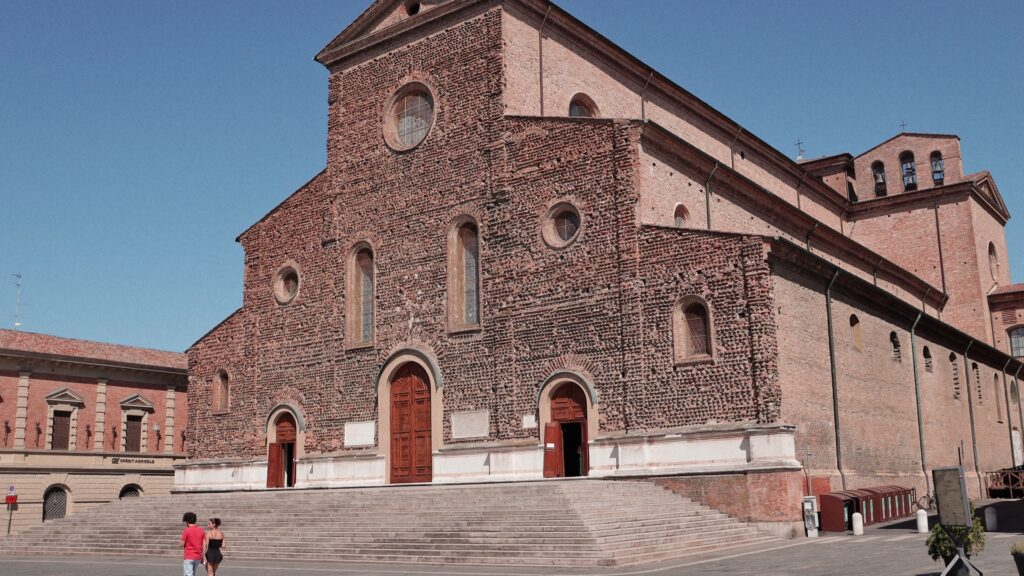
After lunch, return toward Piazza della Libertà to visit the Cathedral of Faenza.
Built during the Renaissance, the cathedral is considered one of the finest examples of Tuscan-inspired architecture in Emilia-Romagna. Its exterior is elegant and balanced, with a quiet presence that fits the atmosphere of the square around it.
Now, I’ll be honest: the interior didn’t impress me as much as some other churches in the region. If you’ve visited Cattedrale di Santa Croce in Forlì, for example, you may find the Cathedral of Faenza more understated by comparison.
But that doesn’t mean you should skip it.
The cathedral has enormous historical importance for the city, and even if it isn’t the most visually dramatic church in Emilia-Romagna, it is still worth stepping inside for a few minutes.
Practical Information
- Opening hours: 7:00–12:00 and 16:00–18:30
7. Explore One of the World’s Most Important Ceramic Museums
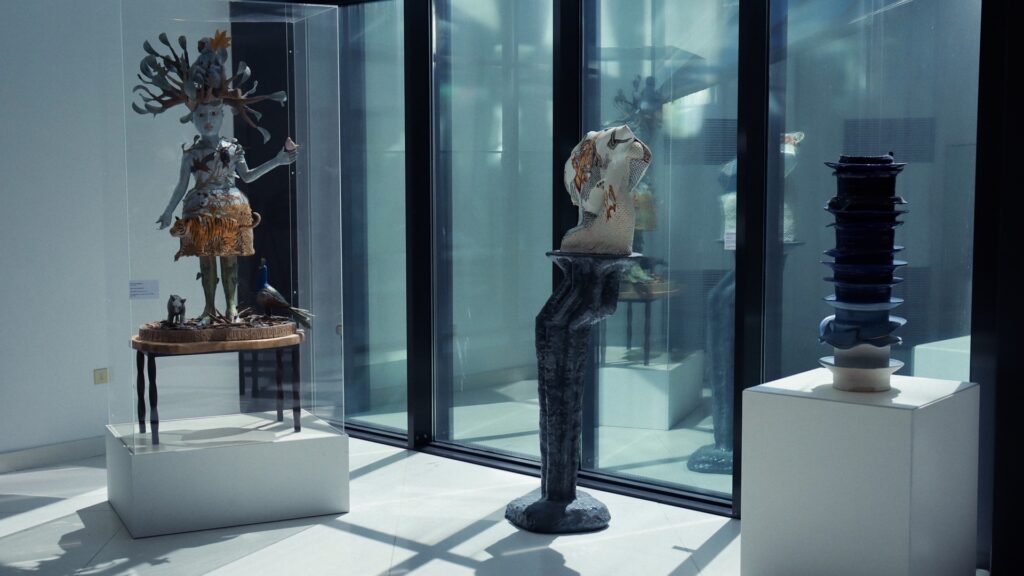
After visiting the Cathedral, make your way to Faenza’s most famous attraction: the International Museum of Ceramics, better known as MIC.
Even if you’re not particularly interested in ceramics, don’t skip it. Trust me.
Before visiting, I assumed I would spend an hour here at most. I thought I would see a few beautiful plates, some historical vases, and then move on.
I was wrong.
The museum is huge, and the collection is far more varied than I expected. One moment you’re looking at classical ceramics, decorative vases, mosaics, and sculptures. A few rooms later, you’re standing in front of bold contemporary pieces that feel closer to modern art than traditional pottery.
That contrast is what makes the museum so interesting.
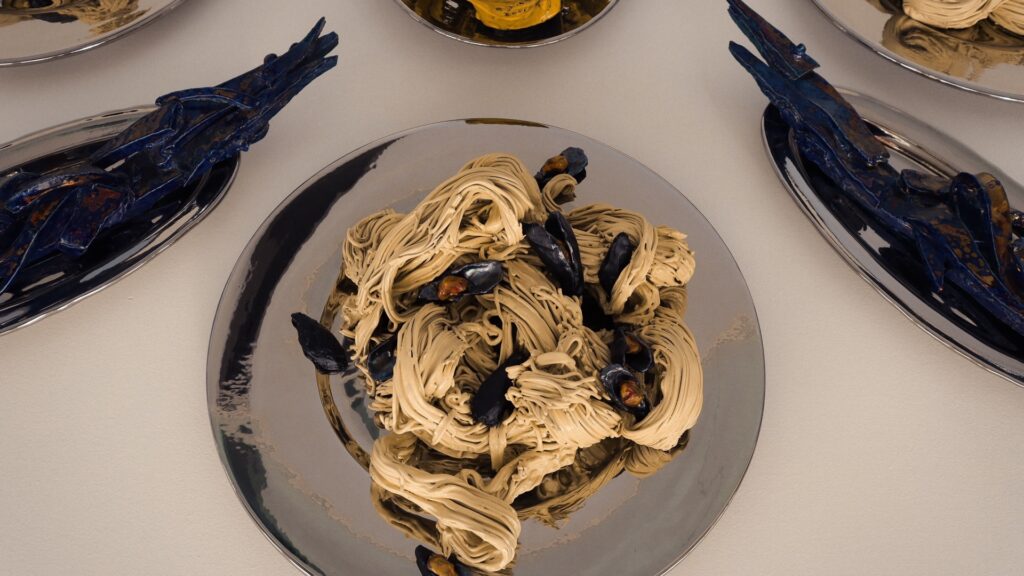
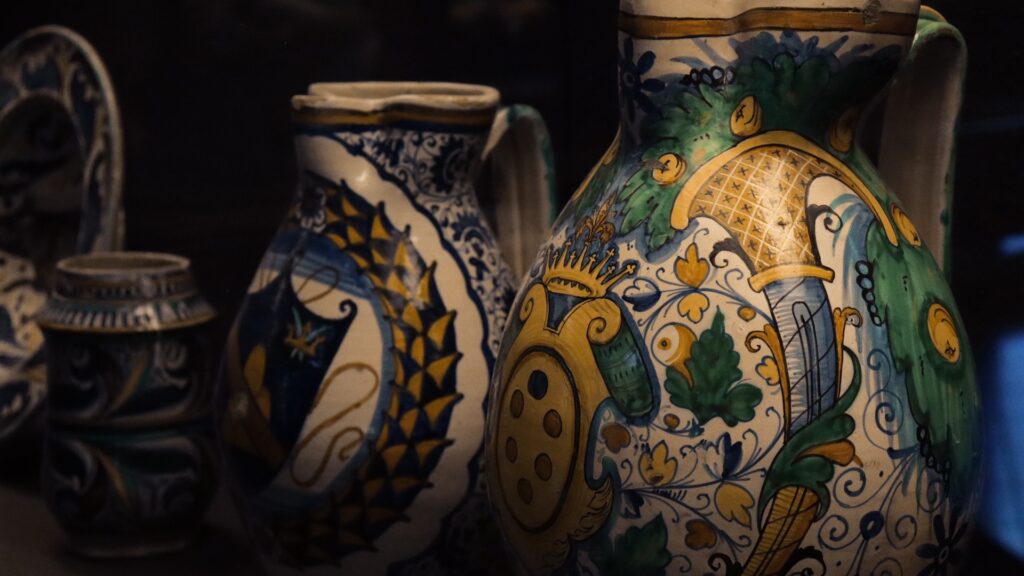
You don’t need to understand ceramic techniques or art history to enjoy it. I definitely don’t. But the museum still kept surprising me because every section felt different from the previous one.
When I visited, the museum was also hosting Nordic Table Design: A Silent Female Revolution (1900–1970), a temporary exhibition running from 20 June 2026 until 10 January 2027.
The exhibition explores the work of female Nordic designers who transformed everyday objects such as plates, glasses, cookware, and tableware throughout the twentieth century.
The museum can easily fill an entire afternoon, but if you’re ready for a change of pace after all that art and history, there’s one final stop I highly recommend before ending your day in Faenza.
Practical Information
- Opening hours: Tuesday–Sunday and public holidays, 10:00 AM–7:00 PM
- Full-price ticket: €12
8. Slow Down in Parco Bucci
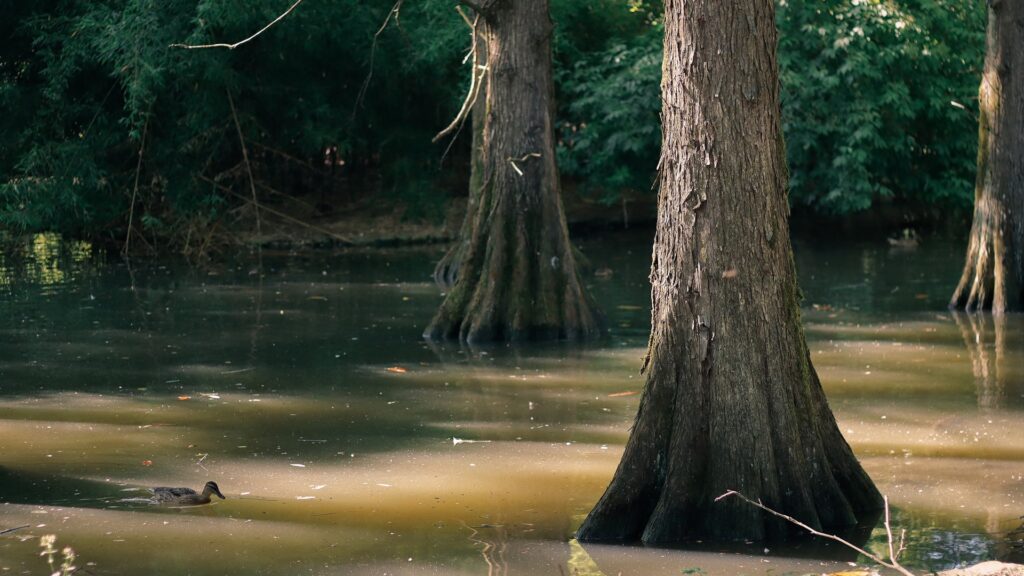
After a day spent exploring museums, churches, and historic streets, I recommend slowing down and ending your visit at Parco Bucci, one of the most beautiful green spaces in Faenza.
Before heading there, stop by Linusice for a gelato, granita, or frappè. It’s close enough to make the detour easy, and honestly, walking through the park with something cold in your hand makes the whole experience better.
Parco Bucci feels calm, green, and slightly unexpected. There are ponds, little paths, bridges. It’s the kind of place where you don’t really need a plan. You just wander until you find a corner you like.
And then there are the animals.
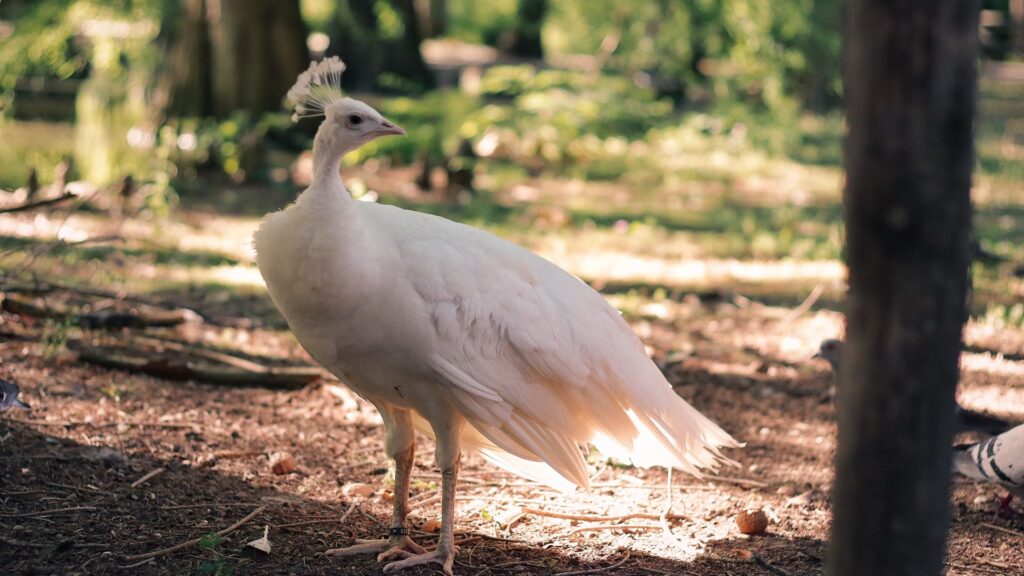
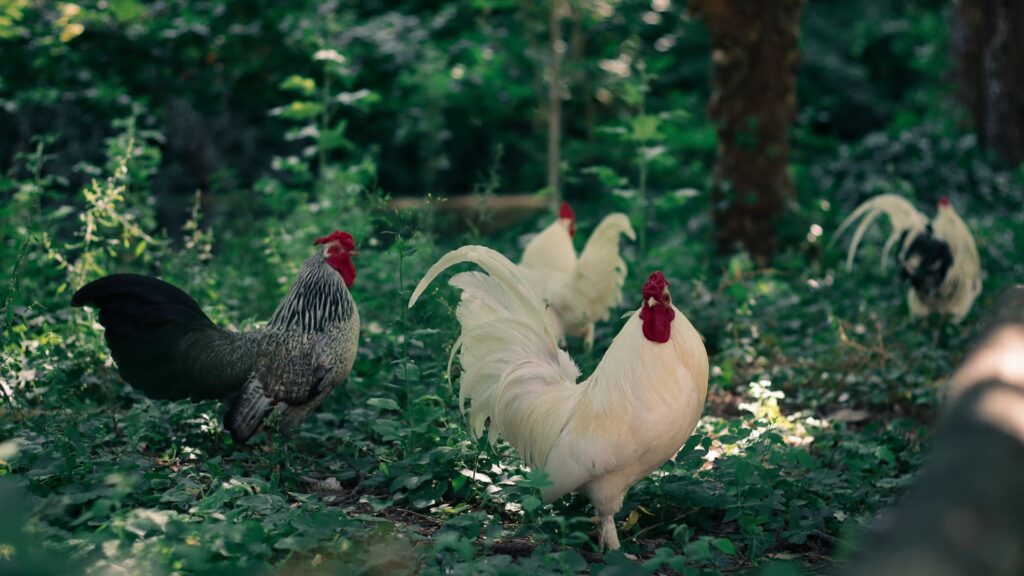
You’ll see birds everywhere, frogs near the water, chickens moving around as if they own the place, and peacocks adding just the right amount of theatrical Italian chaos to the scene.
It’s also a lovely stop if you’re visiting Faenza with children, because the park feels relaxed, spacious, and naturally entertaining.
I would especially recommend visiting in spring, when Emilia-Romagna is in full bloom. The trees are bright green, the flowers are out, and the whole park feels alive without being crowded.
Optional: Experience Faenza’s Medieval Palio Traditions
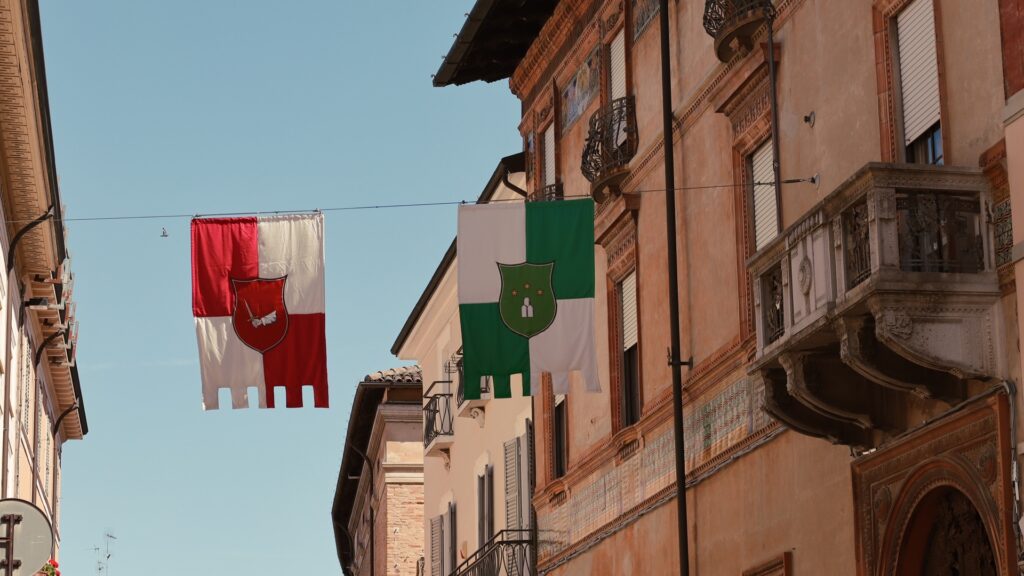
When I visited Faenza, I accidentally stumbled upon something I hadn’t planned for.
As I was walking back toward the train station, I suddenly heard drums.
A few minutes later, a procession of musicians, flag throwers, and participants dressed in historical costumes marched through the streets. Locals stopped to watch, children followed along, and the entire city seemed to come alive.
That’s when I discovered another side of Faenza.
Every June, the city celebrates its historic rioni — the five traditional districts of Faenza — through medieval-style events, parades, flag throwing, music, and jousting competitions. The two most important events are the Bigorda d’Oro and the Palio del Niballo.
The Bigorda d’Oro is often considered the younger version of the Palio. It follows a similar jousting format, but the riders are usually younger or less experienced, making it an important step before competing in the main event.
The Palio del Niballo is the main historical event of the city. During the competition, riders representing Faenza’s five rioni race against one another in a jousting tournament inspired by medieval traditions.
The atmosphere is festive, theatrical, and deeply local — exactly the kind of experience that helps you understand a city beyond its museums and monuments.
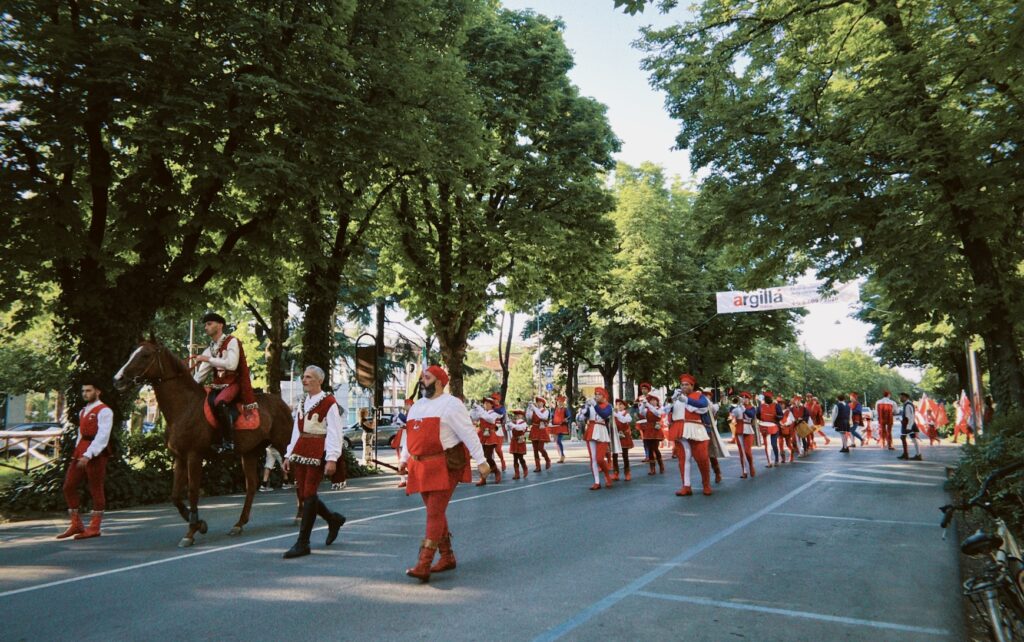
Both events usually take place at Stadio Bruno Neri, which is within walking distance of the historic center and the train station. But even if you don’t attend the tournament itself, you may still catch processions, drummers, flag throwers, and locals wearing historical costumes around the city.
If you’re planning a summer visit to Faenza, I highly recommend checking the official Palio calendar before you go.
The Bigorda d’Oro and Palio del Niballo are wonderful opportunities to see a more festive, communal, and proudly local side of Faenza — the kind of experience you rarely find by simply following a standard day-trip itinerary.
How to Get to Faenza?
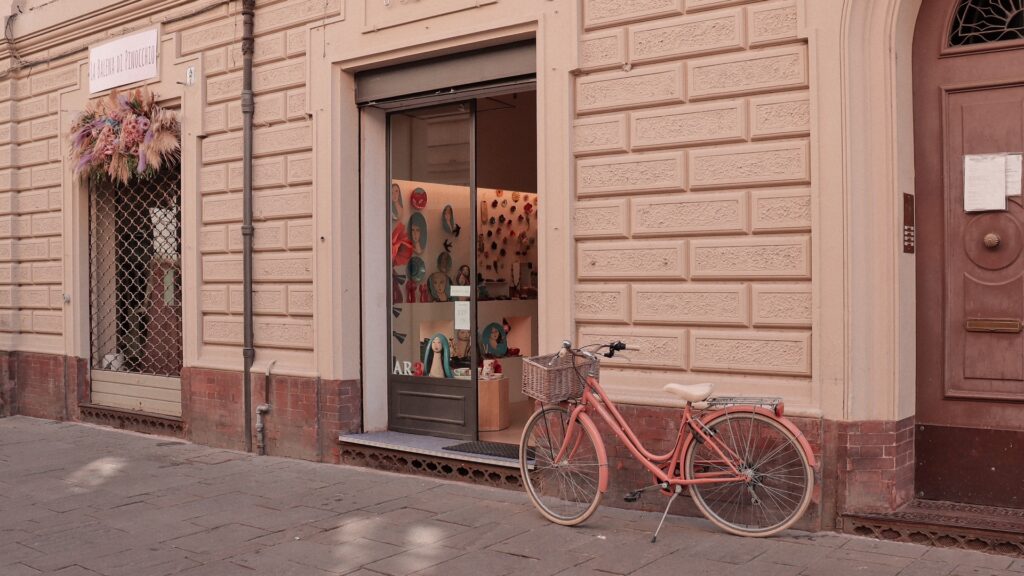
Faenza is one of the easiest day trips in Emilia-Romagna, especially if you’re traveling by train.
The city sits between Bologna and Ravenna, so it works well whether you’re staying in Bologna, exploring Romagna, or planning a broader Emilia-Romagna itinerary.
From Bologna, direct regional trains reach Faenza in around 35–45 minutes. From Ravenna, the journey usually takes about 30–40 minutes, while from Forlì it can be as quick as 10–15 minutes.
If you’re coming from Rimini or the Adriatic Coast, expect the trip to take around one hour, depending on connections.
You don’t need a car to visit Faenza itself. The train station is within walking distance of the historic center, and once you arrive, most of the main sights are easy to reach on foot.
If you do drive, parking is generally easier than in larger cities, but still pay attention to ZTL zones near the historic center. Unless you know exactly where you’re going, it’s better to park outside the center and continue on foot.
How Much Does One Day in Faenza Cost?
One of the things I appreciated about Faenza is that it’s surprisingly affordable compared to many of Italy’s more famous destinations.
Even with museum visits, lunch, coffee, and a few treats throughout the day, it never felt expensive.
Here’s roughly what I spent during my day trip:
- Train ticket from Bologna to Faenza (round trip): approximately €12–18, depending on the train
- Breakfast at Nove100 (brioche + Americano): €3.30
- Pinacoteca Comunale: €5
- Lunch at QCorner (pizza, organic lemonade, and coffee): €13.50
- Frappè at Linusice: €4
- International Museum of Ceramics (MIC): €12
- Palazzo Milzetti: included with museum admission if using combined tickets, or approximately €5 depending on the ticket option available
Total: approximately €55–60 per person for a full day, including transportation, food, and major attractions.
FAQs
Is Faenza worth visiting?
Yes, Faenza is absolutely worth visiting if you enjoy ceramics, art, quieter cities, and slow travel. It doesn’t have the fame of Bologna or Ravenna, but that’s part of its charm. The city feels local, walkable, and surprisingly rich in museums, historic piazzas, and peaceful green spaces.
How much time do you need in Faenza?
One full day is enough to see the main highlights, including Piazza del Popolo, Piazza della Libertà, the Pinacoteca Comunale, Palazzo Milzetti, the Cathedral, the International Museum of Ceramics, and Parco Bucci.
Can you visit Faenza as a day trip from Bologna?
Yes. Faenza is an easy day trip from Bologna by train. Direct regional trains usually take around 35–45 minutes, and the historic center is walkable from the station.
Is Faenza walkable?
Yes, Faenza is very walkable. The historic center is compact, flat, and easy to explore on foot. You don’t need a car once you arrive.
Is the International Museum of Ceramics worth visiting?
Absolutely. Even if you don’t usually visit ceramic museums, the MIC is surprisingly varied, with classical ceramics, sculptures, mosaics, modern works, and temporary exhibitions. It’s one of the city’s most important attractions.
Is Faenza good for families?
Yes. Faenza is calm, walkable, and not overwhelming. Families may especially enjoy Parco Bucci, where children can see birds, frogs, chickens, and peacocks while enjoying a relaxed break outdoors.
Final Thoughts
Faenza isn’t the kind of place that appears on most first-time Italy itineraries.
And that’s exactly why I enjoyed it.
It doesn’t compete with Bologna or Ravenna. It offers something different: a slower day filled with art, local life, good food, and enough surprises to keep you curious.
If you’re looking for an easy day trip in Emilia-Romagna that still feels authentic, Faenza is well worth your time.