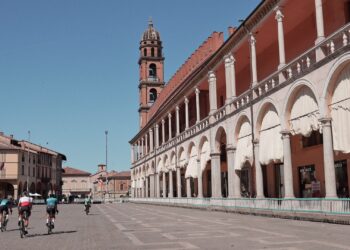
When people think about Ravenna, they usually think about mosaics.
And yes—they’re spectacular.
But after spending a day here, I realized Ravenna is much more than eight UNESCO World Heritage monuments.
It’s a city where you can stand beneath glittering Byzantine ceilings one moment, visit Dante Alighieri’s final resting place the next, then finish the afternoon in a peaceful library, a bustling covered market, or a café hidden inside a historic palazzo.
If you’re planning a trip to Emilia-Romagna, Ravenna deserves far more than a quick stop between Bologna and the Adriatic Coast. It’s compact, easy to explore on foot, and packed with history, yet it somehow remains quieter than many of Italy’s better-known cities.
In this guide, I’ll show you exactly how to spend one day in Ravenna—from its world-famous mosaics and hidden corners to practical tips on tickets, transportation, and where to enjoy a well-earned piadina along the way.
This article contains affiliate links. If you buy through them, Chasing Italy may receive a small commission, at no extra cost to you.
Ravenna at a Glance
- Best known for: Byzantine mosaics and eight UNESCO World Heritage monuments
- Time needed: 1 full day
- Perfect for: history lovers, art enthusiasts, culture seekers, and slow travelers
- Distance from Bologna: approximately 1 hour by train
- Need a car? No
What Is Ravenna Known For?
Ravenna is best known for its extraordinary Byzantine mosaics.
In fact, nowhere else in Western Europe preserves such a remarkable collection of early Christian and Byzantine art.
But after spending a day here, I realized Ravenna is much more than a city of mosaics.
It’s where Dante Alighieri spent the final years of his life. It’s home to peaceful cloisters, elegant libraries, lively markets, and churches hiding unexpected surprises—like a flooded crypt where goldfish swim above ancient mosaic floors.
What I appreciated most was how walkable everything is. Ravenna’s historic center is wonderfully compact. You can spend the entire day exploring on foot, moving from one UNESCO monument to the next while stopping for coffee, piadina, or simply enjoying the city’s slower pace.
What to Do in Ravenna in One Day
Start Your Day with Ravenna’s UNESCO Masterpieces


1. Basilica di San Vitale
If it’s your first time in Ravenna, there’s really only one place to begin: Basilica di San Vitale.
Completed in the 6th century, it’s considered one of the greatest masterpieces of early Christian architecture and, in my opinion, one of the most fascinating places I’ve visited in Italy.
Even if you’ve seen photos beforehand, they don’t prepare you for stepping inside. The walls shimmer with thousands of tiny glass tesserae, while the light changes throughout the day, making the mosaics almost seem alive.
I was especially impressed by the way architecture, color, and light work together. What made the visit even more memorable was sharing it with my family, who came to visit me from Estonia. Watching them look up in complete amazement reminded me that some places really do live up to the hype.
2. Mausoleum of Galla Placidia
Just a few steps away is the Mausoleum of Galla Placidia.
From the outside, it looks surprisingly plain, but don’t let that fool you.
Inside, a deep blue ceiling covered with hundreds of golden stars creates one of the most atmospheric spaces in Ravenna. It’s much smaller than San Vitale, yet somehow feels just as unforgettable.
Because entry is timed and visitor numbers are limited, I’d recommend booking your ticket in advance, especially if you’re visiting during summer or on weekends.
3. St Andrew’s Chapel (Cappella Arcivescovile)
Next, head to St Andrew’s Chapel, hidden inside the Archbishop’s Museum.
Built as the private chapel of Ravenna’s bishops, it’s the only surviving early Christian bishop’s chapel in the world.
Unlike the grandeur of San Vitale, St Andrew’s Chapel feels intimate but, in my opinion, is absolutely magnificent despite its small size.
4. Sant’Apollinare Nuovo
Continue your morning at Sant’Apollinare Nuovo, another UNESCO World Heritage Site and one of Ravenna’s most impressive churches.
Inside, a long procession of saints stretches along the walls, creating one of the city’s most iconic mosaic displays.
As you slowly walk through the nave, the figures almost appear to move with you—a subtle illusion created by the way the artists positioned each robe and foot more than fifteen centuries ago.
5. Battistero Neoniano
Before leaving this UNESCO area, make a quick stop at the Battistero Neoniano.
The simple brick exterior hides one of the oldest surviving Christian mosaics in the Western world. Stand in the center, look up, and you’ll understand why it’s considered one of Ravenna’s greatest treasures.

Practical Information
If you’re planning to visit several UNESCO monuments, I highly recommend purchasing a combined ticket rather than paying separately.
You can choose between:
- 3-Monument Pass (~€12.50) – Includes Basilica di San Vitale, Sant’Apollinare Nuovo, and St Andrew’s Chapel.
- 5-Monument Pass (~€14.50) – Gives you everything in the 3-Monument Pass plus the Mausoleum of Galla Placidia and the Neonian Baptistery.
Book online in advance—Galla Placidia and the Baptistery use timed slots and sell out quickly. Keep the same QR code handy; staff will scan it at each entrance. Dress with shoulders and knees covered, and skip the flash photography.
Visit a Tomb of Dante Alighieri

After spending the morning surrounded by Byzantine mosaics, continue with a short walk to another place that has made Ravenna famous.
The Tomb of Dante Alighieri.
Yes, that Dante.
Even if you haven’t read the Divine Comedy, standing beside the final resting place of one of Italy’s greatest poets is a surprisingly special experience.
The tomb itself is quite modest. If you’re expecting an elaborate monument, you might actually be surprised by its simplicity.
Behind the monument is a little alley with tall trees that I found especially charming.
Admire Mosaics, This Time Under the Water

Just a three-minute walk from Dante’s tomb stands another place that completely surprised me.
I would even dare to say that I found it even more memorable than some of Ravenna’s famous mosaics—and that’s saying something.
From the outside, Basilica di San Francesco looks fairly modest. If you didn’t know what was hidden beneath it, you could easily walk straight past.
But inside lies one of Ravenna’s most unusual sights.
Because the city’s ground level has gradually risen over the centuries, the 5th-century crypt now sits below the water table. Instead of being restored or drained, it has been left exactly as it is.
Peer through the railing and you’ll see ancient mosaic floors resting beneath a layer of crystal-clear water, while small goldfish quietly swim above them.
I’ve visited many churches across Italy, but I’d never seen anything quite like this before.
Stop for Lunch at Mercato Coperto

By now, you’ve spent the entire morning surrounded by mosaics, churches, and centuries of history.
It’s the perfect moment to slow down and enjoy lunch.
I recommend heading to Mercato Coperto, Ravenna’s historic covered market and one of the best places to experience the city’s everyday life.
Unlike a traditional food hall designed mainly for tourists, this still feels like a market that locals genuinely use. You’ll see people stopping for a quick espresso, picking up fresh produce, buying seafood for dinner, or meeting friends over lunch.
What I like most is that you’re not limited to one restaurant.
You can wander through the market, see what catches your eye, and choose between fresh pasta, piadina, seafood, local cheeses, cured meats, or a simple aperitivo. It’s the kind of place where everyone ends up eating something different.
If it’s your first time in Romagna, this is also a great opportunity to try local specialties like piadina, passatelli, or homemade cappelletti.
Stroll Through the Hogwarts-like Library

After lunch, continue your afternoon with one of my favorite discoveries in Ravenna: the Biblioteca Classense.
The moment I stepped inside, I couldn’t stop thinking about Hogwarts.
Grand staircases, centuries-old books, frescoed ceilings, long reading tables, and quiet corridors give the entire building a magical atmosphere. If you’re a Harry Potter fan, you’ll probably understand exactly what I mean.
Housed inside a former Camaldolese monastery, the Classense has welcomed readers since 1708, although parts of the complex date back much earlier.
As you explore, look up at the beautifully decorated ceilings and keep an eye out for one of its most fascinating details: ancient books still chained to their lecterns to prevent them from disappearing into overly enthusiastic readers’ collections.
As impressive as the interiors are, my favorite part was actually outside.
Hidden behind the library is a peaceful cloister garden where students, readers, and locals sit beneath the trees to study, read, or simply enjoy the quiet. I honestly could have stayed there for hours. It feels completely removed from the busy world outside and offers the perfect place to slow down for a while.
Take a Break in Caffe Letterario

Before heading back to the train station, I recommend making one final stop.
Caffè Letterario quickly became one of my favorite cafés in Ravenna—not just because of the food, but because of the atmosphere.
Hidden inside a beautiful 19th-century palazzo just a few steps from Piazza del Popolo, it feels like the kind of place where you naturally lose track of time.
Whether you’re in the mood for a coffee, tea, homemade cake, pancakes, or a light snack, it’s the perfect place to rest your feet after a full day of sightseeing.
How to Get to Ravenna
Ravenna is easy to reach, particularly from Bologna and other destinations along the Adriatic Coast.
For most visitors, the train is the simplest option. Direct regional services connect Bologna with Ravenna, and the journey usually takes around one hour. Ravenna is also well connected with places such as Rimini, Cesenatico, and other towns along the coast, which makes it an easy day trip if you’re already staying in Romagna.
The train station is within walking distance of the historic center, so you won’t need a car once you arrive. From there, you can reach Dante’s Tomb, Sant’Apollinare Nuovo, Mercato Coperto, and many of the city’s main attractions on foot.
You can check current schedules and purchase tickets through the official Trenitalia website. If you use a paper regional ticket, remember to validate it before boarding; digital regional tickets follow the conditions shown in the app.
Driving to Ravenna
Traveling by car can be convenient if Ravenna is part of a wider road trip through Emilia-Romagna or if you plan to combine the city with the Adriatic Coast.
The main thing to remember is that Ravenna’s historic center includes restricted traffic areas known as ZTL zones. These are monitored by cameras, and entering without authorization can result in a fine.
I wouldn’t try to drive directly toward the monuments. Instead, choose a parking area outside the restricted center and continue on foot. Ravenna is compact enough that you won’t lose much time, and walking is far less stressful than trying to navigate narrow streets and access rules.
Does Ravenna Have an Airport?
Ravenna doesn’t have a commercial airport of its own.
For most international travelers, Bologna Guglielmo Marconi Airport is the most practical option. From there, you can continue to Ravenna by train or use one of the available shuttle services.
Final Thoughts
Ravenna is one of those cities that becomes more impressive the longer you spend there.
Most people arrive for the mosaics, and they are absolutely worth the trip. But what stayed with me just as much were the quieter details: Dante’s modest tomb, the flooded crypt beneath San Francesco, the peaceful cloister garden at Biblioteca Classense, and the slower rhythm of the historic center.
I visited Ravenna twice, once in September and again in November, and the city was fantastic both times.
September still had warm light, pleasant temperatures, and that lingering feeling of summer. November was quieter and more atmospheric, with fewer visitors and the perfect weather for spending time inside churches, libraries, and cafés.
That’s one of the reasons I think Ravenna works so well as a day trip throughout much of the year. It doesn’t depend on perfect weather or a particular season. The city’s greatest treasures are always there, waiting behind simple brick façades.
If you’re planning a trip to Emilia-Romagna, don’t treat Ravenna as a quick stop for a few mosaics. Give it a full day, walk slowly, look up often, and leave enough time for the unexpected places in between.
FAQs

Is Ravenna worth visiting?
Absolutely—think of Ravenna as Italy’s quiet over-achiever.
In a city you can cross on foot in 20 minutes, you’ll find eight UNESCO-listed monuments, the best-preserved Byzantine mosaics in Europe, Dante’s tomb, a Liberty-style covered market buzzing with local life, and even beaches just fifteen minutes away by bus.
How many mosaics are there in Ravenna?
Ravenna contains more than 1,500 square metres of mosaics spread across six UNESCO monuments.
Six monuments—San Vitale, Sant’Apollinare Nuovo, the Neonian and Arian Baptisteries, St Andrew’s Chapel, and the Mausoleum of Galla Placidia—form a glittering gallery of late-Roman and early-Byzantine art
How long does it take to walk between Ravenna’s main sites?
Ravenna is delightfully compact—each major monument lies within a 15-minute radius on foot. Allow 30 minutes of leisurely strolling between clusters to soak in hidden alleys and gelato stops.
Is one day really enough for Ravenna?
Absolutely! While mosaic fanatics could geek out for a week, a well-planned day covers the big six (San Vitale, Galla Placidia, San Apollinare Nuovo, Battistero Neoniano, San Francesco, Dante’s Tomb) plus espresso breaks.
Can I buy a single pass for all the mosaics in Ravenna?
Yes—Ravenna offers combined tickets. Most visitors choose the 5-Monument Pass, which covers San Vitale, Sant’Apollinare Nuovo, St Andrew’s Chapel, the Mausoleum of Galla Placidia, and the Neonian Baptistery. Buy it online in advance (time slots for Galla Placidia sell out quickly).